

How To Clean Wide Belt Sander Belts
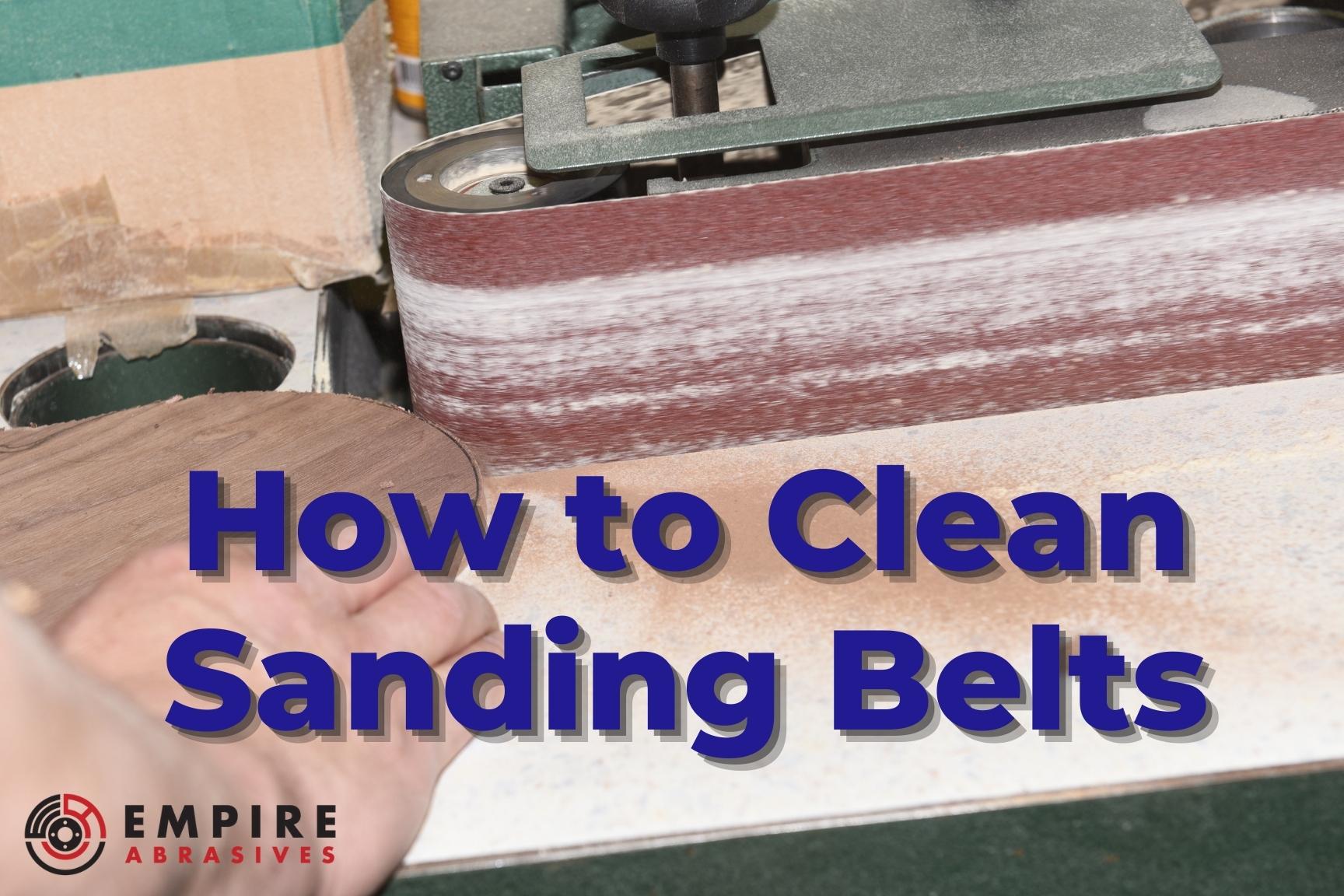
Belt sanders are fantastic tools for stripping, shaping, and grinding things down quickly. However, the belts can go chock-full with grit and residues from old finishes, paints, oily forest, metal, and more, long earlier they wear out. But replacing them just because they become chock-full can go expensive and irksome you down when working on a project.
Can you clean sanding belts, or are they useless in one case they're clogged up? It turns out that you lot can clean them reasonably easily, significantly extending their lives. Below are some methods to apace clean your sanding belts and some tips on proper maintenance to extend the life of your annoying belts.
Why Clean Sanding Belts
If you work with wood or metal regularly, yous're well aware of how speedily sanding belts get clogged, and yous've probably gotten frustrated at how expensive replacement belts are. You also have to accept space to store all those belts, which can likewise become irritating depending on how much space you have.
Perhaps yous've tried to clean them to no avail, so you're stuck buying tons of sanding belts for every project so you lot don't accept to worry about called-for or unevenly scratching your surfaces. Thankfully, the cleaning procedure itself is adequately piece of cake with the right tools on manus.
The Best Method (Abrasive Cleaning Stick)
The best and easiest chugalug sander cleaner is an abrasive cleaning stick. An annoying cleaning stick is a rubberized stick you hold against a sanding belt equally information technology's running through the sander.
Cleaning sticks work on wood, paint, and wood terminate residual, along with metallic shavings and other materials that commonly clog sanding belts. They look similar large pencil erasers and essentially "erase" the clogs on your sanding belts, extending their lives, increasing their efficiency, and improving cuts and finishes.
These are the best method for cleaning sanding belts, designed specifically for that purpose. They are easy to utilise, last a long fourth dimension, and are much more affordable than constantly replacing belts.
The Desperate DIY Shoe Method
This cleaning method is a popular DIY hack. Who doesn't have old shoes lying around that they can destroy to save some sanding belts? Since using rubberized products works all-time at cleaning sanding belts, you can use the sole of an old shoe to clean your belts in much the same fashion you'd use a cleaning stick.
Cheque out this video below to run across how easy it is to clean sandpaper with a shoe:
You'll become the best results with a crepe-soled shoe, which is a shoe with a sole made from layers of latex. They're not the best soles for doing things similar hiking, but the material collects and traps a lot of clay and dust, which is why they're suitable for cleaning sanding discs and belts.
If yous do opt for the shoe method, only brand certain they are an old pair that you don't plan on wearing once more. The grinder will tear off enough of the sole to make the shoes unwearable.
Liquid Cleaners
For wide belts, you can buy h2o-alkaline cleansers instead. Most of them are biodegradable and emulsify the materials bottleneck your belts, making them easy to remove. They mostly merely work on materials similar resin, woods, and paint, so won't be useful for cleaning metal that has loaded up the sanding belts.
With this method, you lot first spray the abrasive side of the belts with the liquid cleaner. The solution volition emulsify the build-up on the belts. Grab an air hose or compressed air to blast off the gunk.
What are Chugalug Sander Cleaner Sticks Made of?
An annoying cleaning stick uses natural or synthetic prophylactic in its construction because the material that most usually gets stuck between the grains of a sanding chugalug sticks to rubber.
Safe is also soft enough that information technology won't reduce your sanding belts' abrasiveness. That'south how they remove dust, rest, and debris without reducing the belt's life, too.
PRO TIP - Using a Grease Stick Before Grinding
Another way to extend the life of your belts is to prevent bottleneck and loading in the first place. This tin exist done with an abrasive belt grease stick that goes on the chugalug before apply. These sticks have a lightweight grease that spreads a sparse layer of lubricant over the surface of your sanding material.
Lubricating belts prevents clogging from the start and reduces friction heat, extending the life of the belt. It also helps ensure your belts cutting more effectively and are excellent for people who piece of work with metal objects like blades.
Properly Storing/Maintaining Belts
In addition to knowing how to clean sanding belts, you should also know how to maintain and store them so you lot tin can become the near out of them.
Cleaning Sanding Belts
Ane of the best ways to properly maintain a sanding belt is to ensure it's clean after each use so anything bottleneck them has no chance to set. Annoying cleaning sticks are easy enough to use that you tin can clean your belts apace after each use.
Merely expose the sanding surface, turn your sander on, and run the stick lightly back and forth until the surface is clean. At that point, you can turn your sander off, remove the belt, and put it abroad.
Temperature and Humidity
Ii of the biggest things that tin can damage your sanding belts are heat and humidity. You should effort and store your sanding belts in temperatures between 60 and eighty degrees Fahrenheit with a relative humidity of around 45 pct.
If y'all only occasionally use a belt sander, you might non find this feasible. However, for those whose sanders encounter more occasional use, proper temperature and humidity are crucial to their belts' longevity. Low humidity can crusade the belts to become brittle, while high humidity can soften them.
Brittle or softened belts tin can snap while you're using them, posing a safety hazard. Storing them in temperatures and relative humidity levels as close to optimal every bit possible is disquisitional not just to their lifespan but likewise to your safe.
Hanging Sanding Belts
Y'all should have your belts out of their packaging and hang them vertically at least 24 hours earlier yous plan to use them. The wider they are, the more important this is because they need a hazard to acclimate to your workspace.
Utilize non-metallic racks with pegs that are at least four inches long on which to hang your sanding belts. Wooden dowels work well for this purpose. And it'south typically a matter of the larger, the better, depending on the size of the chugalug and your sander.
Also, make sure your racks are at least one pes off the floor and 1 foot apart from one another. Avoid storing them directly on physical, too, as concrete constantly releases moisture even in dry conditions.
Final Thoughts
Y'all already know how expensive sanding belts are, and yous probably can't stand replacing them ofttimes considering they clog up.
Fortunately, you accept options when information technology comes to extending your sanding belts' life, including an easy-to-use rubberized annoying cleaning stick. These sticks remove the dust, clay, and residues that crusade your belts to lose their efficacy and efficiency, extend their lives, and reduce the headaches that come with sanding.
Still Take Questions
Our abrasives experts are here to assistance you during regular business hours to discuss your sanding and grinding questions with you. Please feel free to reach out by email, telephone, or the chat part on our website below.

Source: https://www.empireabrasives.com/blog/how-to-clean-sanding-belts-and-tips-to-extend-belt-life/
Posted by: deertheith.blogspot.com
0 Response to "How To Clean Wide Belt Sander Belts"
Post a Comment